11.20.2015

Android 6.0 Marshmallow Update Status For LG G4, LG V10, LG Nexus 5X, LG G3, LG G2, LG Flex 2

LG has started the roll out of Android 6.0 Marshmallow update for its smartphones. The first one to receive the newest Android upgrade is the LG G4 users in Poland and Korea. In the coming month, it will be releasing the update for the LG G3 owners in Poland.

Since the LG Nexus 5X belongs to Google Nexus family, the handset is shipped with Android 6.0 Marshmallow. There is no confirmation of Android 6.0 for LG V10, but since it is the newest flagship from the company it is likely to receive the update soon.

According to Phone Radar, the South Korean tech company had released a beta version of Android M for LG G4 users in Poland. After its success, the upgrade was made available in the home country for variants like LG-F500K, LG-F500L and LG-F500S.

The international variants of the LG G4 such as LG-H810, LG-H815, and LG-H818 are also expected to get Android M in the forthcoming weeks. The publication has added that the new Android build prevents the apps running in the background from exhausting battery life and data when the LG G4 is kept idle. The LG Q+ app has been renamed to Memo Capture+ and the LG Bridge carries a new name of LG AirDrive.

Owners of LG G3 are expected to receive Android 6.0 update by mid-December, GSM Arena reported. As it happened for the LG G4, the LG G3 users in Poland will be the first ones to get the latest Android build.

According to Know Your Mobile, even though the LG G2 that was released in 2013 may be an older device, the South Korean might release the Android 6.0 upgrade for it. Digital Trends has reported that the LG’s Korean website has revealed that the LG G Stylo will be receiving the Android 6.0 update.

The LG G Flex 2 is one of the first smartphones to feature the Snapdragon 810 chipset. However, there is no confirmation on when will it be blessed with Android 6.0 update. Currently, the handset is running on Android 5.0.1 Lollipop.

11.19.2015

LG G Pay: This Is How It’s Going To Work (Reportedly)

LG G Pay – How Will It Work?
According to the South Korean media, LG is currently working together with local card holders Shinhan Card and KB Kookmin Card in order to bring LG G Pay to the masses. Reportedly, LG G Pay will become available to the public in early 2016.

More importantly, the report revealed how LG G Pay might work, and surprisingly enough, LG seems to approach the market very differently than Apple and Samsung. Assuming that the data is accurate, LG G Pay will not rely too much on your smartphone, but instead it will be used in conjunction with a separate plastic card (credit card replacer) provided by LG Electronics. The card replacer will connect to your smartphone through a dedicated application, and we assume that users will be able to link multiple credit cards with the plastic replacer for convenience.


This sounds similar to how services like Plastic and Coin work, so it is a very different approach to the mobile payment market. On short: the good news is that a credit card substitute offers a lot of versatility and is less bound to your smartphone’s hardware capabilities. It would allow LG G Pay to become available to low and mid-range smartphone owners without much fuss, whereas, in contrast, Samsung needs to release new devices with updated hardware (fingerprint scanning technology) in order to expand its business into emerging markets.

The downside is that a credit card replacer is an extra item in your wallet after all, and through this method you won’t be able to simply pull out your phone and pay with it on the fly.

Remember that the information above doesn’t come through official channels, so it is subject to change. We’ll keep you posted if more details emerge.

11.15.2015

LG G4 Review: Now EVEN BETTER With Android Marshmallow

If you had access to a time-travelling DeLorean and for some reason made the bizarre choice to go back only a couple of years, you'd be presented with a very different LG presence in the mobile space compared to what's going on today. LG is, of course, a long-standing name in the electronics business and something of a powerhouse when it comes to home appliances and the like, but a few years ago it wasn't doing so well in the mobile market.

LG had been making moves in the mobile industry for quite some time, just like Samsung, but while its fellow Korean rival was making waves and millions of sales, LG ended up wallowing around on the edges with little consumer interest in its devices. Samsung and Apple still dominated the space. For LG, phone after phone flopped.

LG's massive successes in other areas, like TVs, meant it still had enough clout and cash to keep throwing money at the problem though.

Part of the issue was that the firm didn't take a global enough approach. It would launch a new device in Asia, and then it would take forever to make it across to other markets, stifling sales. By the time a new LG phone landed on foreign shores, it was often not such a new phone, with technology onboard that had been rapidly superceded by rivals that were faster out the gate with new offerings.

Then things changed. LG launched the LG G2 at an event in New York, and rolled it out globally. What's more, it was packing a plethora of hot new tech to tantalise consumers. Sure, it didn't topple its rivals, but it did fairly well. And crucially it caught Google's attention, which led to a partnership and both the Nexus 4 and Nexus 5 being developed by LG, gaining it a lot more consumer attention for its own devices.

The LG G3 followed, and landed at a time when Samsung's Galaxy S5 floundered, allowing it to take the crown for best smartphone of 2014. That leads us to now, and meant that when the LG G4 launched earlier this year there was a hotbed of rabid anticipation for the next model. Does the LG G4 live up to the hype? Let's take a look...

LG G4 Review: Design
The LG G3 was one of the most successful handsets of 2014. It was the first with a QHD display and boasted some of the thinnest bezels ever seen on a handset. For this reason and more it was very popular with users; I personally know several iPhone loyalists who jumped ship to pick up this phone, so the impact the G3 had on the space cannot be understated. It was a BIG deal. 


LG hasn’t really done anything too drastic to the design. There are changes but they’re rather conservative. The buttons are still on the back of the device, the bezels are still uber slim, and the only real change is that the handset appears to have grown something of a forehead, though this is no bad thing. It still handles exceptionally well for a handset with a 5.5in display. 


The chassis of the G4 is ever so slightly curved as well; it’s not G Flex-curved, but there is a slight arch to its construction which LG says makes talking on it that little bit easier. To be honest, I didn’t even notice it until someone in the office pointed it out… still, it’s a nice subtle feature that is clearly intended to make the end-user’s experience of using the G4 that little bit better. 

The big deal re: design on this handset isn’t the front of the device, however, as all the action –– so to speak –– takes place round back. LG has come up with a bunch of very fetching leather back panels that can be switched around, owing to the G4’s removable back panel, or, if you prefer, one of the slightly duller, tacky-looking plastic setups. 

Oh, and in case you’re wondering: YES, the battery can be removed and, YES, it DOES take SD-cards. 
The bog standard plastic back panel, the one we got on our review unit, is pretty rubbish, not really all that much to look at. However, the leather setups, as you can see below, really are very cool. I know Samsung has already done something similar with its Note range, but I don’t care. I think LG has done a much better job tying the leather panel into the handset’s overall aesthetics. It sure as hell won’t be to everybody’s tastes, but that’s why LG made the back removable –– to give you picky beggars a choice. 


The plastic back panels are available in the following colours: Metallic Gray, Ceramic White and Shiny Gold, while the leather setups come in the following: Black, Brown, Red, Sky Blue, Beige and, last but not least, Yellow

LG G4 Review: Display 
HTC could learn a lot from LG, especially with respect to display technology. The LG G4 uses a QHD panel just like its predecessor, but rather than simply sticking with what came before –– a la HTC –– LG has actually made some very impressive improvements to the LG G4’s QHD panel. 

The screen is incredible, as QHD panels usually are. But compared to last year’s model this 2560 x 1440 resolution (538ppi) setup still impresses, as LG has improved colour quality, performance in direct sunlight and, generally speaking, just tightened everything up quite a bit. You can tell this is a second-generation QHD panel, it smacks of second-generation improvements; small things you might not notice at first like its improved performance in direct sunlight, for instance, but things you will almost certainly appreciate when comparing to last year’s model. 


The G4 uses a IPS Quantum Display and N-Type Liquid Crystals, which, granted, sounds like something out of an Asimov novella. But this is not just marketing guff, dreamt up by some intern fresh out of marketing school. No –– this stuff is why the G4’s display is perhaps one of the best QHD panels on market right now, with 25% improved brightness over its predecessor and 98% of the DCI colour gamut present and accounted for. 

And if none of that makes sense, well, just take our word for it when we say the LG G4’s display is BONKERS good. Seeing is believing, though, and we’d strongly recommend checking one out in store to see just how good it actually is in real life. 

The handset itself is pretty big by 2013 standards. But nowadays its 149 x 76 x 9.8mm chassis doesn’t feel too out of place, though it is quite a bit larger than Samsung’s Galaxy S6. Still, this is a sort of phablet device, depending on your definition, so size should not be an issue to anyone interested in this sort of device –– most Android handsets are in the 5.5in-6in range these days, anyways. 

LG G4 Review: Software –– A Look At The Best New Bits
Android overlays are, at the best of times, overkill. Often they look rubbish, are packed with useless bloatware and do little in the way to add anything useful to the mix (i.e. nothing you can’t get using a third-party application of your choosing). Things aren’t as bad as they used to be, however, as more and more OEMs woke up to the fact that most consumers would prefer a nice, stock Android UX. 

Now EVEN Better With Android Marshmallow Update
The latest update to the Android operating system offers a number of features designed to enhance the user experience, such as:

Permissions have been simplified with greater control of the information applications can access, not only at the installation stage but any time
Silent feature for sound and vibrate mode as well as a Do Not Disturb mode to block all sounds or only alarms and notifications
Doze Mode which shuts down background processing of certain apps when the phone is not in use, to significantly prolong battery life
"By working closely with Google, LG has been able to bring Android 6.0 to the G4 ahead of any of our competitors," said Chris Yie, vice president and head of marketing communications for LG Mobile Communications Company. "While speed alone isn't an indicator of great service, it does go a long way toward giving consumers the confidence that LG is committed to its existing customers first."

Samsung has stripped down TouchWiz to its bare bones, Motorola has switched to stock and HTC, who’s Sense UX is one of the more polished setups, has ensured everything is so well optimised using its overlay isn’t actually all that problematic. Sony’s needs A LOT of work and LG’s, like TouchWiz, has improved quite a bit in recent times. 


In terms of how it looks, well, I guess it is fairly inoffensive. LG has attempted to jazz many of its elements with Google’s Material Design to varying effect. The iconography and fonts are nice and clear, infinitely preferable to Sony’s now archaic-looking overlay. It also features a bunch of me-too applications that track steps, health and the like –– everybody’s into health these days, you see. 

I really do like the Knock on feature (whereby you double tap the display to wake the phone) and the built in IR Blaster, which is simple to use and extremely easy to set up. I had everything connected to it in my flat in under five minutes and working inside the QRemote application, bar Apple TV which, for obvious reasons, did not want to work. 

Other useful features inside the new LG software include the ability to have multiple applications open on the home screen, just as you can on Samsung gizmos. This is a very useful feature but one I seldom use. Still, it is definitely worth mention because I know a lot of people really like this feature inside TouchWiz. The Gallery application has been revamped also and is now one of the best gallery solutions I’ve used on Android. It’s simple, easy to navigate and, most importantly, has excellent, well sign posted sharing options. 

LG G2 To Receive Android 5.1.1 Lollipop: Means LG G3 & LG G4 Will Do Too!
In recent months there's been a bit of confusion over which of LG's devices will get the new version of Android Lollipop and when - there was a lot of talk about how LG had "no plans" just because certain carrier networks hadn't heard anything from LG on the subject, when asked by customers. Well now there's evidence that the LG G4 will indeed be getting Lollipop fairly soon!

It's pretty well established in the mobile space that you can get a good idea of which devices will be updated by a manufacturer depending on what's the lowest-level or oldest model pegged to receive the new software. While there are still no specific details about the LG G3 and LG G4, word has now emerged that the aging LG G2 will be updated to Android 5.1.1 Lollipop in the next two months. The news comes via AndroidPit.de and its anonymous source said to be an insider at LG's software development arm in Korea.

So that means it's fairly safe to assume that the LG G4 and LG G3 will be getting the same software update in the same time frame; September at the latest, but possibly earlier as they're newer models.

LG G4 Review: Specs & Hardware
Like the best of your friends, the LG G4 comes to the party armed to the teeth and ready for action with a wide array of updates, tweaks and refinements to core specs and hardware, though the most notable update of all is the camera –– more on that later though. 

Inside you’ll find Qualcomm’s Snapdragon 808 chipset, the cousin of the now, largely more prominent Snapdragon 810. Like the 810, the 808 is a 64-bit chipset and it is insanely powerful. These parts of reviews always feel a bit like overkill these days, as 99.9% of high-end phones are rocking truly phenomenal processing power and masses –– 3GB of RAM, in this instance –– of memory. The end result of all this, as you’d imagine, is a very similar experience across a variety of not very similar handsets. 

To me, the Galaxy S6 broke new ground with respect to smoothness and general UX performance, surpassing anything Android-based I’d tested before. The LG G4 isn’t far behind though; it is a marked improvement on last year’s model and everything feels better as a result. I did run into some lag during the first few hours of usage but whatever caused this seemed to disappear pretty much straight away because it was smooth sailing from there on out. 

The handset I tested shipped with 32GB eMMC ROM and can handle SD cards up to 128GB, a HUGE USP in today’s Android market now that Samsung has finally ditched removable batteries and SD-card support from its Galaxy S6 and Galaxy S6 EDGE handsets. 

Basically, if you're in the market for a top of the line handset, but don’t want either the Samsung Galaxy S6 or Samsung Galaxy S6 EDGE, then you’d be hard pressed to find a better Android setup than the LG G4. It has everything you could want and a whole heap more besides. Take note, HTC. THIS is what the HTC One M9 should have been like. 

LG G4 To Get Unlocked Bootloader
Well this is an interesting development. According to reports LG will allow users to unlock the bootloader on its handsets, starting with the LG G4.

The word comes via an official post on LG's "LG Developer" website, where the firm revealed the European LG G4 will be the first model to support the unlocks, this is model H815. So if you own that particular device and want to unlock it, you can go to the page and follow the instructions. That said, you should make sure you know what you're doing as unlocking it does void the warranty.

"We value your opinion. We have heard your opinions from the open developer community. Starting in 2015, LG will allow customers to unlock the bootloader for certain releases of LG smartphones," reads LG's statement.

"This will allow you to participate in Android development using LG hardware. Please be advised that this feature is intended for developers only. Therefore, we strongly recommend not to unlock the bootloader unless you fully understand what you are doing."

As well as allowing developers to directly create and test apps on LG's hardware, the bootloader unlock also means users can Root the phone and install custom version of Android, for example, getting a stock experience if desired.


LG wants to be numero uno of the mobile space when it comes to cameras. The company has invested untold millions into its imaging technology in a bid to surpass Apple and Samsung as the biggest name in mobile camera performance and nowhere is this more obvious than on the LG G4. The camera is AMAZING, perhaps even the best point and shoot setup we’ve used all year, including the iPhone 6 Plus and Samsung Galaxy S6. 

It’s a 16-megapixel sensor paired with f/1.8 fast aperture lens and it shoots pretty incredible stuff, even in less than expert hands. Even the front-facing shooter is an impressive 8MP, indicating once again LG’s desire to be the last word when it comes to mobile phone cameras. 


The key here though, is the f/1.8 fast aperture lens which lets in a lot more light than many of the G4’s competitors. This results in better shots in low-light as well as more detailed shots in normal lighting. The G4 does have a bit of a nasty habit of over-processing stuff, however, which is more noticeable when you pull images from the phone to your PC, but only the most hardcore of photographers are going to notice this, so do not be too alarmed –– it isn’t necessarily a bad thing. 


Speaking of pros, the LG G4 camera does something rather special: in Auto mode, you’re given access to every conceivable control from manual focus, to shutter speed, to ISO to aperture value, which, providing you know what you're doing, allows for some seriously impressive shots. And if that wasn’t enough, you can even use DNG raw file format for some serious fun inside Photoshop. No other handset on market really does anything quite like this and, once again, we can see why LG has included it –– it wants to dethrone Apple as the go-to camera phone for professional photographers, and the only way it is going to do that is to give photography buffs what they want: CONTROL! 

LG G4 Review: Battery 
Battery performance is a funny thing to test, as it is so subject to user habits. But battery life is a big deal, always has been, always will be. Thing is –– the LG G3 wasn’t all that great, and a lot of this had to do with its QHD panel. Has the company made any improvements this time around, or are we looking at the same issues this time around too? Great display, rubbish battery life? 

Samsung set the bar exceptionally high with the Galaxy S6; it used a gorgeous QHD panel but via some form of black magic or voodoo managed to improve battery life by a HUGE margin over 2014’s Galaxy S5 –– it’s also worth noting it did this while using a relatively teeny battery. As I said: witchcraft. 

The LG G4 uses a 3000 mAh removable battery and, thanks to an update, it now supports Qualcomm’s QuickCharge 2.0 as well, meaning you can charge it from flat to around 80% in 30 minutes or less –– such a good feature. Actual battery performance is pretty damn respectable too, though not quite as good as the Galaxy S6 –– but, then again, not much else is. 

During my two weeks with the LG G4 it never let me down, never once was I out late and realised it had died. It can do, at a push, 1.5 days with medium usage. Ramp things up to heavy, however, and you can, if you really try, run the battery down in a single day. If you are a heavy user, therefore, it is almost certainly worth topping up the handset around 4PM if you know you’re going out in the evening. 

How does it compare to other handsets? Well, if I had to rank it in order of the handsets I’ve tested during the past 12 months, I’d say it is better than the Nexus 6 and HTC One M9 but not quite as good as the iPhone 6 Plus and Samsung Galaxy S6. Again, though, this is a BIG improvement on what came before, as last year’s G3, while impressive, was pretty pants when it came to battery life. 

LG G4 Review: Verdict 
LG has once again hit the ball out of the park. The LG G4 isn’t just a decent update to an already very good phone, it is now vastly improved with vastly superior imaging capabilities, improved battery performance and a beautifully refined display, which illustrates profoundly just why QHD, power hog that it is, is very much here to stay in flagship Android handsets. Once you’ve used a display this good you could never go back to a 1080p setup, it just wouldn’t feel right, which makes me all the more sad because now I have to go back to my iPhone 6 Plus…

I wasn’t too interested in this device prior to its launch, nor was I all that interested when it came through the mail to my flat. But now, after a couple of week’s worth of testing, I am completely besotted with this thing and love pretty much everything about it –– all that’s missing is a leather back panel, get me one of them and you’d have a zealot on your hands. 

So who is the LG G4 for? Simple: anybody and everybody. If you’re bored of Apple, get this phone. If you’re bored of Samsung and don’t want either the Note 4 or the Galaxy S6, get this phone. Long standing HTC user that’s now grossly depressed about the HTC One M9? GET THIS PHONE. 

It might not be the loudest and jazziest thing in the world but it is a solid handset that does everything you’d expect and a whole lot more. Pick one up and use it for a week or two and you’ll know what I’m talking about. This handset, like its predecessor, is one of the best Android phones money can buy right now. 


LG has just announced a new variant on the LG G4, dubbed the LG G4c, which is pitched as a “competitively priced” model that shares “many of the same high-end user experience features” as the regular G4.

The LG G4c is a bit smaller than the regular LG G4, although not enough to call it a “mini” variant as it’s only half-an-inch smaller with a 5in display. LG describes it as being “more compact”, which is probably what the “c” stands for. While LG insists it has the LG G4’s “premium styling” it’s worth pointing out that the back panel options only include the metallic plastic grey, white, or gold. Leather seems to be reserved exclusively for the higher price tag LG G4. Apart from that though, it’s looking very similar in terms of shape and visual style.

Being a lower-cost device, the specs have taken an expected and unavoidable hit. The primary camera is an 8MP setup instead of the LG G4’s 16MP shooter, while the front-facer is 5MP. It’ll still feature LG’s gesture controls like Knock On, Knock Code, Gesture Shot, and Glance View.

Inside, the processor is a 1.2GHz quad-core setup with 1GB of RAM. There’s 8GB of onboard storage and microSD support for expansion via cards and a 2,540mAh removable battery cell. Naturally this handset runs Android Lollipop 5.0 with LG UX 4.0 on top.

Lastly, the display is not too shabby as it’s an IPS LCD with a 720p HD resolution at a whisker shy of 300ppi (294ppi to be precise); so basically the same as the iPhone for the last few generations prior to the iPhone 6.

Carphone Warehouse is now selling the LG G4c for £229 SIM-free.

LG G4 S Mid-Ranger On The Way
Word has reached our ears that LG is prepping an LG G4 S handset as a mid-range variant of its LG G4. According to information and pictures published by Russian web source Hi-Tech.Mail.Ru, the LG G4 S will be a slightly smaller version of the LG G4, but largely identical in terms of overall design. It will have a 1080p 5.2in display, an 8MP primary camera with LG's laser autofocus features and LED flash, and an unidentified 1.5GHz octa-core processor.


From the images we can see the phone will have the plastic bodywork options available, but there's no word on the leather backing seen on the higher-end LG G4. Our guess would be it will not be an available option to keep the mid-range price and ensure the LG G4 remains unique. So far there is no word on pricing or a release date for the LG G4 S.

11.07.2015

LG G Flex 3 release date, pricing, design and feature rumours: LG G Flex 3 to be unveiled early 2016

The LG G Flex 2 was an interesting smartphone, with its curved form-factor and material that would automatically heal scratches. With this being said, the Qualcomm Snapdragon 810 chipset featured in the device caused overheating issues. Has LG done enough to tempt consumers back, or has the damage been done? Here, we take a look at all the rumours regarding the LG G Flex 3’s potential release date, pricing, design and features.

The LG G Flex 2 was an interesting smartphone, with its curved form-factor and material that would automatically heal scratches. Although it was received by a warm welcome, it was later discovered that the phone itself that would become warm thanks to the inclusion of the Qualcomm Snapdragon 810 chipset, which was plagued by overheating issues. Has LG done enough to fix the problem with its smartphone, or has the damage been done? Here, we take a look at all the rumours regarding the LG G Flex 3’s potential release date, pricing, design and features. See also: LG G Flex 2 review
LG G Flex 3 UK release date and pricing: When is the LG G Flex 3 coming to the UK and how much will it cost?
The LG G Flex 3 hasn’t yet been unveiled by LG, so we can’t tell you the exact UK release date – just yet, anyway.  However, with this being said we can cast our minds back to the release of the LG G Flex 2 and estimate when we think it’ll be released in the UK. The G Flex 2 made its debut at CES 2015, and was made available in the coming months to buy both SIM-free and on contract. Phone manufacturers tend to release a new flagship around the same time every year, so we’d assume that the LG G Flex 3 will get a CES 2016 reveal and will go on sale soon after.
This theory is backed up by MobiPicker, which had a tip off in July claiming an early 2016 release date, although the tipster claims it could be slightly later than January – possibly not until March 2016.
So, what can we expect to see in the way of UK pricing? When the LG G Flex 2 first went on sale earlier this year, it had a £529 SIM-free price tag. With this in mind, we’d assume that the LG G Flex 3 would be around the £529 mark, if not slightly more expensive if the rumours concerning its spec are real, which we come to in more detail below. MobiPicker’s LG source claims that it’ll cost between Rs. 50,000 – 60,000 (Indian Rupee) which converts to around £494-594, in line with our estimation.
See also: Best smartphones of 2015, and best new smartphones coming in 2016
LG G Flex 3 design and build: What will the LG G Flex 3 look like?
Interestingly, the design of the LG G Flex 3 is one aspect of the upcoming smartphone that hasn’t really been leaked - hence us using images of the LG G Flex 2 in this article. There are a handful of rumours online, but these seem a bit far-fetched so the following should be taken with a pinch, if not a whole teaspoon of salt. The first claim is that the upcoming LG G Flex 3 will sport a metal body, an upgrade from the glossy plastic body of the LG G Flex 2, which would give the Flex 3 a more premium look and feel. We’re not so sure about this as the G Flex series is all about curved displays, and metal is definitely the most pliable of most materials.
As well as a metal body, the upcoming LG G Flex 3 may even sport a 6in QHD display with a resolution of 1440x2560, bumped up from the 5.5in QHD display used in the LG G Flex 2. We’re not too sure that LG would make the jump from 5.5in to 6in, as 5.5in smartphones are generally accepted as phablet-sized and anything bigger is usually uncomfortable to use - and of course, the original G Flex had a 6in display which didn't recieve the warmest of welcomes. Of course, we could be wrong and the LG G Flex 3 could come with a 6in display, but we would be surprised.
LG G Flex 3 feature: What to expect from the LG G Flex 3
So, what else can we expect to see from the LG G Flex 3? While rumours are sparse at the time of writing, a select few features have been leaked. According to MobiPicker and its LG source, the LG G Flex 3 should be powered by the upcoming Qualcomm Snapdragon 820 chipset, coupled with a whopping 4GB of RAM.
The Qualcomm Snapdragon 820 chipset is the most powerful mobile processor designed by the company, but isn’t yet available to manufacturers and won’t be until December (hence the March 2016 release date). LG used Qualcomm’s flagship 810 chipset in the LG G Flex 2, which suffered from overheating issues and consequently affected sales of the handset. Even though a researcher has said that there should be no heating issues with the Snapdragon 820, it is a risk for the company as it (literally) got burnt earlier this year by being the first to use the 810 chipset.
With regards to storage, it’s suggested that the LG G Flex 3 will provide 32GB of internal storage. While that should be enough for most users, power users will be happy to know that the storage is expandable thanks to the inclusion of a MicroSD card slot. There’s also a 3,500 mAh battery (needed to power the huge screen!) and reports of a fingerprint scanner embedded in the home button.
Camera wise, there’s discussion of the LG G Flex 3 sporting a whopping 20.7Mp rear facing camera and an 8Mp front-facing camera, though there are no other details available yet regarding the features of the cameras.

10.22.2015

LG G Flex 2 16GB Variant Price Cut To $239 From Original Price Of $598 On eBay

Flexible body and display clad LG G Flex 2 smartphone, tied to the model number “H955,” is now available at a significantly discounted price on eBay. The discounted model is available only in limited quantities and it is a “brand new factory unlocked” GSM handset.

According to the eBay listing, the LG G Flex 2 price has been cut to $239.99, specific to the 16GB version. The original price of the handset is $598.99. This means buyers get a killer discount of  60 percent. This smartphone supports 4G LTE and it is now available in Platinum Silver color. Readers should, however, note that the device comes with a European Charger and an U.S. Adapter.

Upon placing the order, the phone will be shipped free of charge. The seller “Mobile Pros” has a whopping 97.9 percent positive feedback at the retailer site. Here is the link to order the 16 GB LG G Flex 2.

Meanwhile, here is a quick summary of the LG G Flex 2 specifications for those planning to purchase this device. This handset features a 5.5-inch Curved P-OLED display, packed with 1,080 x 1,920 pixels resolution and Corning’s Gorilla Glass 3 protection.

Under the hood, it comes powered by an octa-core (Qualcomm Snapdragon 810) SoC and backed by 2 GB of RAM. On the software front, Android Lollipop OS runs the device; however, it is upgradable to the latest OS version.

There is a 13-megapixel rear-facing camera sensor with LED flash and OIS support, in addition to a 2.1-megapixel shooter for selfies at the front. Apart from the 16 GB native storage, the LG G Flex 2 supports microSD card slot for further expansion.

Other key LG G Flex 2 features include Rapid Charging option, self-healing back panel coating and NFC support. Lastly, a good-enough Li-Po 3,000 mAh non-removable battery unit backs the entire handset and it provides approximately 20 hours of 3G talk time and 450 hours of 3G stand-by time.

10.12.2015

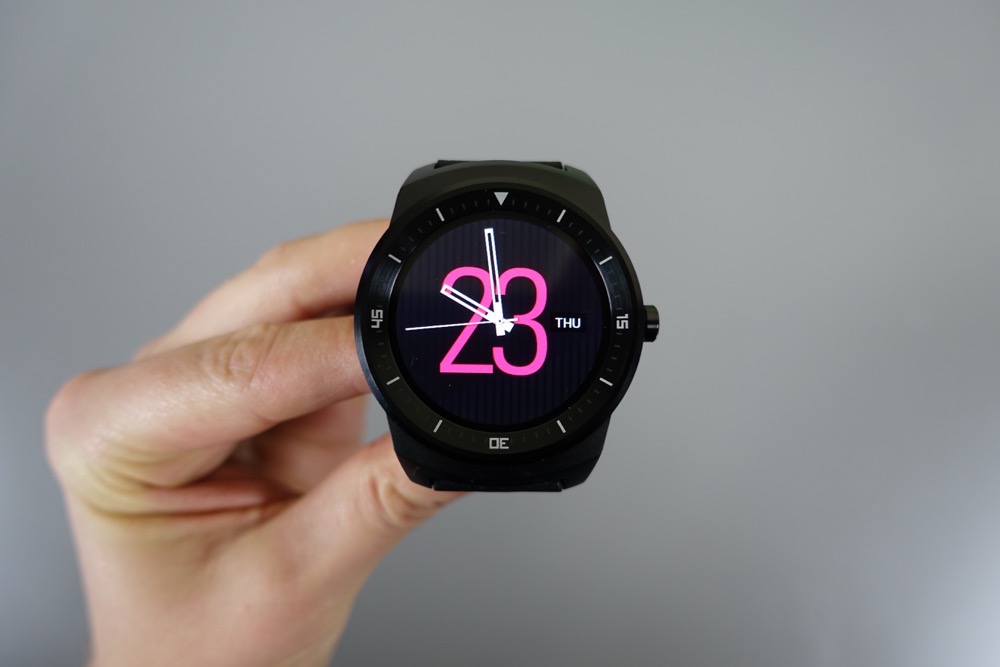
LG G Watch Urbane review

LG’s been in the Android Wear game since day one.

While the original square G Watch wasn’t much to write home about, the G Watch R offered us a better idea of where LG can take Google’s wristputers. Its circular design and impressive OLED screen give the Urbane a good platform to build on and deliver the best Android Wear experience available.

So then. Does it?


Face lift

While the original G Watch R wasn’t ugly, it certainly didn’t set our hearts aflutter. The G Watch Urbane is, thankfully, a rather large improvement.LG has ditched the Watch R’s etched dial, instead opting for a plain metal watch case which is less distracting, and far more handsome.

We’ve been stopped quite a few times by passers by, asking about the Urbane and commenting on its looks, which is something we never experienced with its predecessor. It’s very well put together too, and has held up over months of use with little to no physical damage or scratches, despite more than a few knocks.

Size-wise though, it’s still a little bulky for smaller-wristed gadgeteers, and it’s definitely not as sleek as the Apple Watch. The leather strap with white stitching is a classy touch, though we’d still prefer the ultra-soft leather strap found on the Moto 360. Still, it’s a standard size, so you can switch it up as much as you like.

Come full circle

The Urbane has the same 1.3in 320 x 320 plastic OLED display as the G Watch R, and we’re not complaining. It’s still a full circle, unlike the Moto 360’s, and is just as sharp and as easy to read in daylight as before.

One benefit of the Moto 360’s cut-off screen however, is the fact that it has an ambient light sensor at the bottom. Because the Urbane lacks this, you have to manually adjust the brightness depending on your location, which can get annoying. Sure, there’s a brightness boost shortcut in the drop down settings, but it’s still not as handy as automatically adjusted brightness.

A benefit of the OLED display technology is the production of full, deep blacks, which make watch faces look more natural and also consume less power when a predominantly black design is used. Speaking of which…

Super stamina
The Urbane’s battery life (for a smartwatch) is pretty good. It lasts nearly two days’ worth of normal use.

Normal use for us means setting the screen brightness to two, and having it connected to our phone constantly, with all notifications on. We also turned the Urbane off at night when we sleep, because there’s no point in keeping it on if we’re not wearing it.

Compared to the first-gen Moto 360 and Apple Watch then, its 410mAh battery performs well, though it still can’t match the Pebble Steel’s one-week battery. Given its superior screen however, this will be an acceptable trade off for most people.

Android Wear, evolved


The Urbane is running the latest and greatest version of Android Wear (5.1.1), which brings with it a pile of improvements (some being more useful than others).

Emoji support probably won't matter to most people, but the new dropdown shortcut for Theatre Mode is a very welcome addition. If you're out in a dim or dark place and you don't fancy advertising your flashy screen-mounted wrist to the world, you can turn Theatre Mode on to turn the screen off and cease all notifications. It's a simple but very handy shortcut, and it's even easier with a quick double-press of the power button.

Another new feature that Android Wear 5.1.1 brings to the Urbane, is Wi-Fi support. This means that you can still receive notifications, even if your device is out of Bluetooth range.

We personally didn't find much use for this ourselves, given that our smartphones are essentially glued to our hands, but if you've got bad signal in your house, you can leave your phone near a window for example, and walk around knowing you won't miss anything.

Gesture support is one of the bigger additions, and they work by letting you dismiss, undo, and flick through different notification cards by flicking your wrist towards/away from you. We didn't really find much use for this in practice, and you'll get a few odd stares if you do it in public, but it could be useful if your hands are busy when cooking or driving - though we don't advocate the latter. Keep those eyes on the road everyone.

Power in spades

Smartwatches don’t have to be as powerful as their smartphone brothers, but as our initial experience with the original Motorola 360 showed, stuttering and lag can be an annoyance.

Like the G Watch R, we found no problems with the Urbane’s ability to flick through menus and run apps at all, and have no complaints about its Snapdragon 400 processor or 1GB of RAM.

While you could argue that there’s no need for a more powerful processor, we’d still like to see newer processors from LG (and other manufacturers) in future smartwatches, more for their increased energy efficiency than anything else.

LG has also once again left out GPS smarts, so the Sony Smartwatch 3 remains the best Android Wear option for regular pavement pounders.

LG G Watch Urbane Verdict


The Urbane is easily the best LG smartwatch we’ve laid eyes on, and is currently the best Android Wear smartwatch we’ve reviewed. It loses a few marks for its build however, as we’ve been spoilt by the different size choices offered by Apple and Motorola.

Still, if your wrists are happy to accept it, then you’ll have slick smartwatch with a very good screen, that’ll easily last you nearly two whole days on a single charge. With the Urbane 2 and new Moto 360 around the corner though, you might want to hold off a bit, though it’s £185 price tag makes it a very tempting option.


9.14.2015

LG G Pad II 10.1's Big Battery Should Dominate

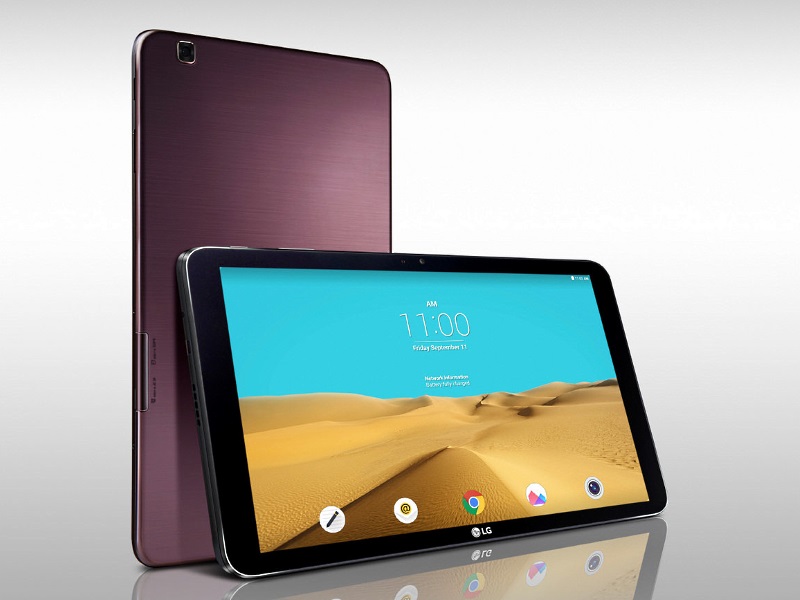
BERLIN - The flagging tablet market is in desperate need of some innovation. Some companies are opting for odd add-ins such as projectors. LG’s approach with the G Pad II 10.1 seems to be more subtle, but useful, owing to its bigger battery that should blow away the competition's endurance numbers. At IFA in Berlin, Germany, I got a chance to hands-on with LG’s latest tablet. It didn't rock my world in terms of design, but this Qualcomm Snapdragon 800-equipped tablet with 2GB of RAM and 16GB of storage was a solid device. 

With a 1920 x 1200-pixel resolution on its 10.1-inch screen, the LG Pad doesn’t have the super pixel-dense display of a Galaxy Tab S2. Measuring 10 x 6.3 x 0.3 inches and weighing 17.2 ounces, it's not particularly slim or light. Even its bezels, which LG says is the slimmest out of any of the G Pad II’s similarly-sized competition doesn't particularly wow, which could also be said of its attractive, but not outstanding, metallic bronze paint job.


But what the G Pad does have is a massive 7400mAh battery, which should give it some truly impressive battery life. Last year’s G Pad had a slightly larger 8000mAh battery, which resulted in a chart-topping 13 hours and 55 minutes of battery life, and with increases in energy efficiency coming from Android 5.1, I’d expect this new G Pad to repeat with another class-leading time for battery life.

You also get a handy microSD slot to supplement the 16GB of onboard memory, and Microsoft Office pre-installed for when you want to get some work done in a pinch. There’s also a 5-megapixel camera in the back the back and a 2MP cam up front, so pictures should look ok, if not super sharp.

Unfortunately, without any word on pricing, we’ll have to wait to see how the cost figures into the G Pad II 10.1’s overall value. But, assuming it eventually sports a budget-friendly price, the battery life alone could be enough to recommend it. We'll have to wait until we get it in the lab to be sure.  

8.31.2015

LG G Pad 2 with 1080p display rumoured for October launch

LG could be preparing another bid for a slice of the Android tablet market as rumours suggest a successor to its G Pad 8.3 is in the works.

The LG G Pad 2 will include an upgraded display with a 1080p resolution, according to social media tipster Leaksfly.


Under-the-hood improvements also appear to be on the cards as the tablet is listed with a quad-core Snapdragon 805 processor, 3GB of RAM, and 32GB of storage.

The leak also suggests that the G Pad 2 will feature an 8-megapixel rear camera, a 5-megapixel front-facing snapper, and Android 5.1.1.

LG has been tipped to launch the tablet in October, exactly two years since the original model debuted.


8.28.2015

LG To Launch Hi-Fi Music Service For LG G4, G3, G2, And G Flex Users

Through a press release, LG announced that it will begin to offer a high-fidelity, or Hi-Fi, music service for owners of its premium smartphones.

The decision by LG to release such a service reflects the increasing popularity and demand for high-quality music, as seen by the success of music streaming services such as Spotify and the hype surrounding the launch of the new Apple Music.

The service that LG is releasing, however, is not a music streaming service, as there is no mention of the service being one. Instead, it is a music download service that will store Hi-Fi music in the premium smartphones of customers.

Hi-Fi music will deliver high-quality audio that will sound very close to the original recorded music, with playback capabilities of 24-bit and 192kHz. This is around six times clearer and richer compared to the quality of sound coming from a normal CD, which plays music at 16-bit and 44.1kHz.

The devices that will be compatible with the soon-to-be-launched music service are the premium smartphones that have the capability to play 24-bit music. Specifically, these LG smartphones are the LG G4, LG G3, LG G2 and LG G Flex 2.

Customers that qualify for the Hi-Fi music service will be able to download up to two Hi-Fi tracks for free per month. Users will also have the option to buy songs to download at prices of up to 50 percent off from the regular price.

The new Hi-Fi music service will be introduced beginning this month through the LG Smartworld app and through the LG World website across almost 70 countries, including the United States, United Kingdom, Australia, China, Brazil, France, Russia and Italy.

"Our Hi-Fi music service reflects our ongoing commitment to providing additional customer benefits to loyal LG customers," said LG Mobile Communications Company marketing communication head and VP Chris Yie.

Yie adds that while music in the digital mp3 format are perfectly fine for most users, owners of Hi-Fi music capable LG devices have the opportunity to enjoy richer music through their smartphones and LG's upcoming Hi-Fi music service.

LG has not yet released an official name for the service, which will challenge Korean rival Samsung's Milk Music streaming music service that was launched earlier this year.

8.26.2015

LG G Watch Urbane Gets Australian Price And Release Date

The vast majority of smartwatches are unstylish. This much we know. LG is doing everything it can to bring the age of the unfashionable wrist-computer to an end with the G Watch Urbane: a sexy smartwatch which is finally coming to Australia.

First announced at Mobile World Congress in February, the G Watch Urbane features a 1.3-inch P-OLED 320×320 screen, a 1.2GHz Qualcomm Snapdragon 400 processor, 512MB of RAM, 4GB of internal storage, a 410mAh battery and comes with either a gold or silver bezel/case.

It’s also dust and water resistant with an IP67 rating to keep it safe on your wrist from the harsh reality of the real world.

The G Watch Urbane may be stylish and flashy, but it’s also pretty bulky. There are people who love their chunky watches, so we’ll have to see just how it stacks up next to other big watches when we review it soon.

You’ll be paying $449 for the G Watch Urbane from Telstra, JB Hi-Fi or Harvey Norman from 1 September.

8.24.2015

LG’s new 8-inch tablet has a full-size USB port

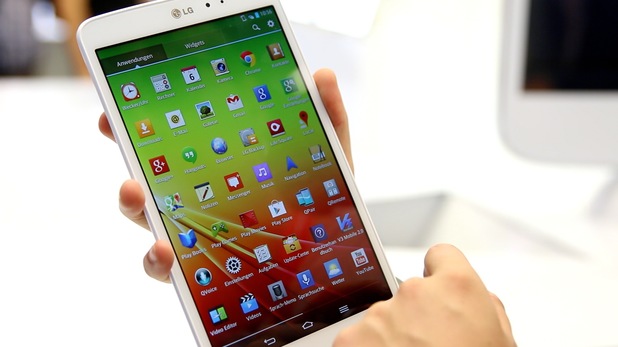
LG has quietly announced a new tablet, named the G Pad 2. Currently only available in Korea, the device is a successor to last year’s G Pad, and a slight step up from the G Pad F, which came to AT&T earlier this year. The G Pad range consisted of three different sized tablets — a 7-inch, an 8-inch, and a 10.1-inch version — but so far, the G Pad 2 only comes in a single, 8-inch size.
What’s new? Technically, not much. The screen has a 1280 x 800 pixel resolution, and is fitted to a curvier, more modern body. Another Snapdragon 400 processor running at 1.2GHz provides the power, but the RAM has been boosted to 1.5GB, up from 1GB on the previous model.

The big changes with the G Pad 2 are on the accessory side. First is the introduction of a stylus, and LG highlights the slimness of the tip, making it ideal for precision work. Tablets that include a stylus aren’t anything new, but the G Pad 2 is one of the first we’ve seen with a full-size USB port built into the chassis. That’s right, no more messing about with admittedly clever dual-function mobile USB sticks, the G Pad 2 8.0 will happily accept any USB connection — and it’s no only about storage expansion either, it’ll handle keyboards and mice.

Not that storage will be a huge problem. There’s 32GB of internal space, plus a MicroSD card slot ready to increase this by up to 128GB. Other features include a 5-megapixel rear camera, a 2-megapixel front camera, and a big 4200mAh battery. The tablet also comes with Android 5.0 installed, and Microsoft’s Android Office apps.
Spotted on LG’s Korean website, there’s no sign of other G Pad 2 tablets, but there’s a chance we’ll see both a smaller and larger version in the future. LG hasn’t announced the G Pad 2 8.0 internationally either, but all this may change during the IFA tech show in September.

8.19.2015

LG G Flex 2 vs. LG G Flex: What could be the difference?

It was recently revealed that South Korean company LG Electronics is preparing to unveil the successor to this year's LG G Flex 2 curved smartphone sometime by March of next year.


photo from LG website
The LG G Flex 2 was announced earlier this year in January and was later launched in February.

Last month, a rumor surfaced revealing most of the expected specifications for the upcoming LG G Flex 3. Here's the difference between the new phone and its predecessor in terms of the specs and features.

In a review by Tech Radar, the LG G Flex 2 was commended for its flexible display screen, camera features and fast software performance.

The LG G Flex 2 sports a 5.5-inch display screen with a 1080 x 1920 pixel resolution. According to GSM Arena, the LG G Flex 3 is rumored to sport a 6-inch display screen, which is 0.5 inch larger than the previous model, along with QHD pixel resolution.

The LG G Flex 2 comes with a 13-megapixel camera on the back and a 2.1-megapixel camera on the front. On the other hand, the LG G Flex 3 is expected to have a whopping 20.7-megapixel primary camera, according to recent rumors, along with an 8-megapixel shooter on the front.

Under the hood, the LG G Flex 2 has a Qualcomm MSM8994 Snapdragon 810 quad-core processor, 2GB RAM and 16GB expandable built-in memory storage. In addition, another option is available offering 3GB RAM and up to 32GB internal memory.

For the upcoming LG G Flex 3, it is rumored to have Qualcomm's latest Snapdragon 820 processor, 4GB RAM, and a 32GB expandable built-in memory. The upcoming phone is also anticipated to sport a metal body and to come with a fingerprint scanner onboard. Also, website MobiPicker reports that the LG G Flex 3 might cost around US$500 to US$700.

Since the LG G Flex 3 handset is still in its early stages, these specifications should be considered as speculations.

8.12.2015

Alleged LG G Flex 3 Release Date Set For March 2016: To Feature 6-Inch Display, Fingerprint Scanner

LG is working on a possible G Flex 2 successor, Mobi Picker reports. The “LG G Flex 3,” its says, will be released in March 2016. The report also gives key specifications and features of the device.

The flexible body and display clad G Flex series is an LG trademark. But the new report from Mobi Picker says the LG G Flex 3 will house cutting-edge flagship-quality configurations, complete with metallic chassis.

The LG G Flex 3 will come powered by the Qualcomm Snapdragon 820 chipset, currently in the works. Chinese analyst Pan Jiutang says the powerful chip will start shipping only after December. Therefore devices lined up for release in 2015, like the Xiaomi Mi 5, will not be powered by S820. But the shipping time frame works fine for the next LG handset. The overheating seen in the Snapdragon 810 chip is apparently not prevalent in the Snapdragon 820, says Phone Arena, quoting a researcher as the source.

The rumored LG G Flex 3 specifications include a humongous 6.0-inch display, fitted with a Quad HD screen resolution of 1,440 x 2,560 pixels. Plus, the Snapdragon 820 chip will be aided by a killer 4 GB of RAM.

The LG G Flex 3 will come equipped with a massive 32 GB of built-in storage space. In addition, the handset will support expandable storage options. Furthermore, the device will reportedly feature a phenomenal 20.7 MP rear-facing camera unit, similar to the Sony Xperia Z3 series of devices. Plus, the front camera will be fitted with a gracious 8 MP snapper to capture killer selfies.

The standout feature, however, is the addition of a fingerprint scanner on the home button, similar to Apple and high-end Samsung devices. LG has not confirmed the G Flex 3 specifications or release date thus far.

8.03.2015

The LG G Watch R no longer needs a Bluetooth connection

LG has announced that its second smartwatch, the G Watch R, will soon be able to receive notifications and other information over Wi-Fi.

The new feature will arrive with a firmware over-the-air update over the next few days along with the latest version of Android Wear, and will negate the need for a Bluetooth connection to users’ phones for receiving alerts.

That should help users save a bit of their phones’ battery life as well. It’s a small, but handy update for owners of LG’s first smartwatch, that went on sale at the end of 2014 for $299.

7.27.2015

LG G Edge: New Trademark Shows Device Names Similar To Samsung Galaxy S6 Edge

The trend of curved-screen smartphones, pioneered by Samsung, has apparently caught the attention of other OEMs as well as reportedly trademarked an LG G Edge variant.

At the CES 2015 event, LG reportedly showcased a double-edge-curved display clad smartphone to a selected few. The LG G Flex lineup has flaunted flexible devices for a couple of years now. However, LG has not released a device with edge display so far.

Meanwhile, Phandroid reported that LG could be looking forward to producing Edge variants as the tech giant reportedly recently filed trademarks for 8 names. All of these variants have “Edge” appended to the moniker. The names include “Super Edge,” “Dual Edge,” “Upper Edge,” “Dual Side Edge,” “Side Edge,” “Double Edge,” “Two Edge” and “G Edge."

Phone Arena, on the other hand, reported that it is quite possible that LG could be working on a dual-edge variant, similar to the Galaxy S6 Edge. Therefore, the trademarked names “Dual Edge”, “Dual Side Edge”, “Double Edge” and “Two Edge” sound logical. At the same time, the name “Upper Edge” could mean the bezels wrapping the top of the smartphone, instead of the sides.

Although LG has not yet confirmed anything about the handset, Phone Arena reported that the South Korean tech giant can be expected to announce the device in late-2016 or beyond.

7.17.2015

LG G Pad II 10.1 With Android 5.1 Lollipop, Snapdragon 800 Launched

LG has expanded its G Pad tablet-series with the launch of the G Pad II 10.1. The South Korean company has announced that the new LG G Pad II 10.1 will be showcased at the upcoming IFA event in Berlin next month. The tablet will be available in Wi-Fi only and LTE models and will go on sale in markets in North America, Europe and Asia. The company is likely to reveal pricing and exact availability of the tablet locally at the time of launch.

The G Pad II 10.1 launch announcement comes a week after the unveiling of the LG G Pad II 8.0, which is also likely to be showcased at the IFA event next month.

The company adds that its new LG G Pad II 10.1 comes with Reader Mode, which while reading ebooks reduces the blue light of the display backlight. The Dual Window mode divides the screen allowing to run two apps at the same time, and QuickMemo+ allows users to create, save and share memos from any screen.

The new G Pad II 10.1 tablet also comes pre-loaded with Microsoft Office suite of apps and will also feature an additional 100GB of free OneDrive storage for two years.

For specifications, the LG G Pad II 10.1 features a 10.1-inch WUXGA (1920x1200 pixels) display offering a pixel density of 224ppi. It is powered by a quad-core 2.26GHz Qualcomm Snapdragon 800 processor coupled with 2GB of RAM. Based on Android 5.1.1 Lollipop, the tablet comes with 16GB of inbuilt storage and supports expandable storage via microSD card. The tablet sports a 5-megapixel rear camera and also comes with a 2-megapixel front-facing camera.

The LG G Pad II 10.1 is backed by a 7400mAh battery, measures 254.3x161.1x7.8mm, and weighs 489 grams. Both the LG G Pad II 10.1 tablet Wi-Fi and 4G models come with identical innards except that the LTE model features a SIM card slot and supports 3G and 4G LTE networks. It will be available in Brilliant Bronze colour.

Announcing the launch, Chris Yie, vice president and head of marketing communications for LG Mobile Communications Company said, "The LG G Pad II 10.1 was developed in response to consumers' feedback and optimised for multimedia consumption. Customers asked for a large display, bigger battery and faster performance all without raising the price. The G Pad II delivers on all counts."

7.02.2015

LG’s 10-inch G Pad II offers the improvements

Earlier this month, LG quietly unveiled the second generation of its 8-inch G Pad for the South Korean market — a rather uninspiring Android tablet with low specs that barely improved on the original 8-inch G Pad. Thankfully though, the company isn't just sticking with the basics for its Android tablets, and today announced the 10.1-inch G Pad II, which offers beefier hardware including a 1920 x 1200 display, a 2.26 GHz Snapdragon 800 processor, and 2GB of RAM.


Although there's nothing incredibly exciting about the device (16GB of internal memory and rear and front-facing cameras of 5 megapixels and 2 megapixels apiece don't set the pulse racing), it does at least look smart and businesslike, with a few nice software features to boot. There's an e-reader mode that reduces blue light output to supposedly stop your eyes hurting, a multitask feature for using two apps side by side, and each tablet comes preloaded with Microsoft Office for Android Tablet and 100GB of free OneDrive storage for two years. That, plus a hearty 7,400 mAh battery that LG claims is the "largest in its class" might make the 10.1-inch G Pad II a productive little machine.


There are no details yet on pricing or exact launch dates, but we can expect to find out more about the new device at the IFA trade show in Berlin next month. We at least know that unlike its 8-inch little brother, the 10.1-inch LG G Pad II will be available in North America and Europe in both LTE and Wi-Fi variations, and LG is also promising that it hasn't raised the price compared to the original 10.1-inch G Pad. We'll have to wait until IFA to find out for sure.